From Authors to Curators
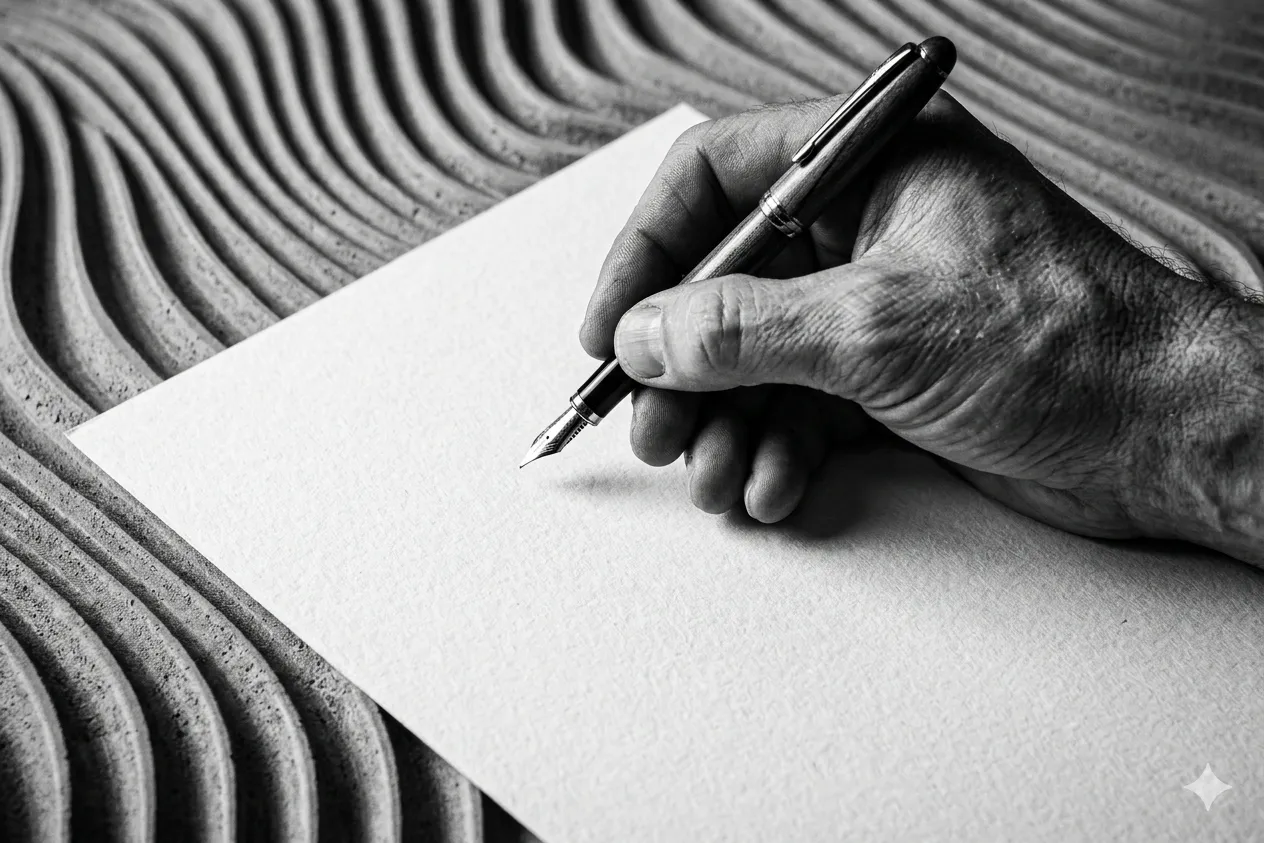
When did you last review a piece of code, or finish reading a document, and understand it less than when you started? It was probably recent. It was probably AI-generated. And the person who produced it probably thought they were being thorough.
It is becoming an epidemic in engineering and knowledge work. Code, design documents, technical proposals, all becoming increasingly hollow and unreadable. There are fixes: better prompts, building a “harness”, choosing the right model for the job. These are not wrong. But they are treating the symptoms. The chronic underlying condition is something more uncomfortable.
We have shifted our cognitive role from authors to curators, and we are only now beginning to notice the full cost of that shift.
The bottleneck didn’t disappear, it moved
Before AI, the bottleneck in producing any artifact — code, architecture, documents — was generation (formerly known as writing). That effort was slow and often painful, but the friction was load-bearing. The struggle to produce something was also where the thinking happened. You couldn’t write a clear design document without first developing a clear design position. You couldn’t write working code without reasoning through the problem. The artifact was the thinking made visible.
AI removed that bottleneck. This is genuinely useful. But removing it didn’t remove the work — it exposed the next bottleneck: validation.
We now produce far more, far faster. That means the burden of validation has grown precisely as our habit for it has atrophied. And validation is harder than generation. You are evaluating someone else’s thinking rather than externalizing your own. You are reading against the grain of something that looks authoritative, looking for the absence of judgment beneath the fluency. That is a different and more demanding cognitive task than the one it replaced.
Fluency without thought
This is not, at its core, a prompting problem. It is a problem about what authorship means.
Ownership is downstream of authorship. You can only truly own something you genuinely authored. And authorship isn’t about whether you typed the words or wrote the code. It is about whether the thinking is yours, whether you struggled with the problem, formed a position, and took responsibility for the judgment.
What large language models are optimized to produce is fluency without thought. They are extraordinarily good at it. When we ship that output without completing the cognitive work ourselves, we are not creating. We are performing creation. The artifact exists. The thinking does not.
What gets quietly lost is what you might call the cognitive loop that made human-produced work valuable in the first place. The dialectical inner dialogue - the false start, the revised position, the moment of clarity — is where judgment is built and intellectual ownership is earned. It is also, not coincidentally, what makes work worth trusting. Anyone who reviews it can sense when the thinking was done, even if they can’t articulate why it feels hollow when it wasn’t.
Authorship as a virtue
No tactic restores this. No prompt recovers the thinking that wasn’t done.
What is actually needed is a culture that treats authorship as a virtue worth protecting. One that recognizes the struggle to form a position and take responsibility for a judgment as real work, not as inefficiency to be engineered away or delegated to an AI agent.
This matters urgently as we move more and more toward agentic AI. If we haven’t protected authorship at the level of making things, we are poorly prepared to protect agency at the level of taking actions. The habits we build now around curation versus genuine ownership will determine how seriously we can take either.
The question worth sitting with is not how do we prompt better? It is what are we willing to think for ourselves?